
You connect a wallet to a decentralized exchange, approve a token, complete a swap, and move on with your day. Weeks later, the protocol may still be authorized to spend that token from your address. Nothing appears wrong until a vulnerable contract, compromised application, or malicious signature turns an old permission into a new loss. This is the uncomfortable reality of token approvals: the transaction you remember is often not the permission that remains.
For a US DeFi user, approval management is therefore less like clicking “connect” and more like maintaining a set of standing authorizations. A wallet can hold assets safely while still exposing them through permissions granted to third-party contracts. Understanding that distinction—and checking what a transaction actually permits—is more valuable than memorizing a list of popular protocols.
The approval transaction is not the swap
Most Ethereum-compatible tokens use a standard contract design that includes an allowance mechanism. When a decentralized exchange or lending application needs to move tokens on your behalf, you generally send an approval transaction to the token contract. That transaction records an allowance: a specified amount that another address, usually a protocol contract, may transfer from your wallet.
The later swap, deposit, or repayment is a separate action. This creates a mental-model problem. Users often think, “I approved this token for one trade.” Technically, they may have approved a contract to spend a larger amount, or even an effectively unlimited allowance, until that permission is changed or revoked. The approval is not inherently malicious; it is a practical design pattern that reduces repeated prompts. But convenience converts a one-time decision into a continuing exposure.
That is the first important distinction: wallet ownership and contract authority are different layers of control. Your private key determines who can authorize transactions from the wallet. An allowance determines whether a previously authorized contract can move a particular token under the token’s rules. A secure DeFi routine needs to inspect both.
A realistic failure scenario
Imagine an investor who uses a decentralized exchange to convert a stablecoin into another asset. The investor approves the stablecoin, completes the trade, and leaves the application. The exchange later suffers a contract exploit, or the user has interacted with a fraudulent front end that pointed to a malicious spender. If the allowance remains active, the risk may extend beyond the original transaction. The attacker does not necessarily need the investor to approve anything again.
This scenario does not mean every lingering approval will be exploited. It means the user has accepted an avoidable dependency: the safety of an old spender, its upgrade process, its administrative controls, and the security of the application’s surrounding infrastructure. DeFi users often focus on market risk and smart-contract risk while overlooking permission risk. Approval management is where those risks meet.
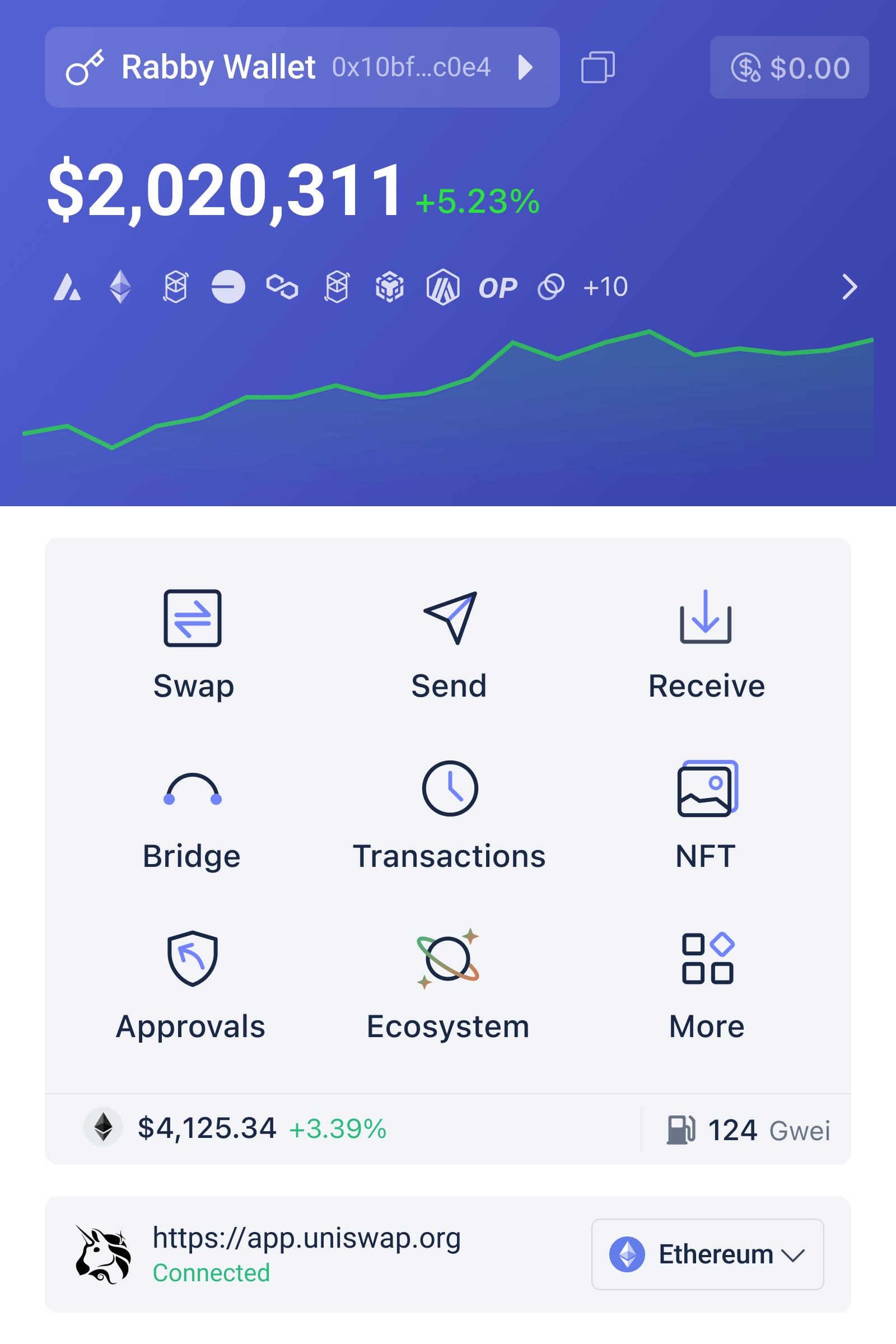
Rabby Wallet can help make that decision more visible by presenting transaction simulations, risk indicators, and contract-interaction details in the wallet experience. Users considering a rabby wallet extension should still treat these features as decision support, not an automatic guarantee. A wallet can surface suspicious behavior; it cannot prove that every contract will remain safe after the transaction is signed.
Three ways to handle approvals—and what each sacrifices
Unlimited approvals: efficient but persistent
Unlimited approvals are common because they reduce friction. A user may approve a token once and conduct many future interactions without another approval transaction. For active traders and liquidity providers, that can save time and network fees.
The trade-off is duration and scope. If the spender remains authorized, an incident involving that contract can matter even when the user is not currently using the protocol. Unlimited approval does not mean the contract will immediately drain the wallet, but it increases the amount of trust placed in that spender. It is a reasonable convenience choice only when the user understands the contract, expects repeated use, and accepts the continuing exposure.
Exact or limited approvals: narrower exposure, more friction
A limited approval restricts the spender to the amount needed for a particular action. This follows the principle of least privilege: give an application only the authority it needs, for only as long as it needs it.
The limitation is practical. Some interfaces request approval before the final amount is known, and users may face another approval when they return. On networks where fees are high or transactions are time-sensitive, that extra step can be frustrating. Limited approvals also do not eliminate risk if the contract itself is malicious or the user signs an unrelated harmful transaction. They reduce the blast radius; they do not create certainty.
Revocation: cleanup, not a time machine
Revoking an allowance changes the token contract’s recorded permission so the spender can no longer use that allowance. It is useful after a one-time interaction, when a protocol is no longer trusted, or when a user is simplifying an old wallet.
Revocation has two boundaries that are easy to miss. First, it requires another transaction and therefore may involve network fees. Second, it does not undo transfers that already occurred, repair a compromised private key, or remove every possible authorization. A wallet can have approvals across multiple networks, assets, and spender contracts. Good cleanup is systematic rather than symbolic.
How Rabby fits into a safer workflow
The most useful wallet security feature is not a bright warning by itself; it is information presented before a user signs. Before approving a token, examine the asset, the spender, the requested amount, and the network. Ask whether the action is an approval, a transfer, a permit-style signature, or a contract call that combines several operations.
Rabby’s value is strongest when it helps connect those technical details to the action you think you are taking. Transaction simulation can reveal expected balance changes, while warnings may draw attention to suspicious contracts or unusual parameters. Those signals can interrupt a dangerous habit: approving first and investigating later.
Still, users should not outsource judgment to any wallet. Simulations depend on the state and behavior the wallet can observe. A contract may behave differently under later conditions, a malicious interface may change, and an approval warning may not capture every social-engineering risk. The correct approach is layered: use wallet analysis, verify the site and domain, keep software updated, separate high-value holdings from experimental funds, and sign only what you can explain.
A reusable approval-management routine
Before an interaction, identify the exact protocol and the token being approved. If the application is unfamiliar, begin with a small amount and avoid connecting a wallet that holds long-term savings. During signing, read the spender and amount rather than treating the approval prompt as a routine confirmation.
After the intended activity, decide whether the permission still has a purpose. Active liquidity providers may reasonably keep selected allowances, while a user who made one swap may prefer to revoke. Periodically review approvals on every network used by the wallet. “I do not use that chain anymore” is not the same as “there are no permissions on that chain.”
A useful rule is to classify approvals by purpose: recurring activity, temporary experiment, or abandoned interaction. Recurring permissions deserve monitoring. Temporary permissions deserve an exit plan. Abandoned permissions are candidates for revocation. This is more effective than trying to eliminate every approval, because the goal is controlled exposure rather than impossible zero risk.
What to watch next
Wallet interfaces are likely to become more important as DeFi applications combine swaps, bridges, lending, and account-style permissions in fewer user actions. That may improve convenience, but it also makes transaction intent harder to inspect manually. If future interfaces can reliably show not only what a transaction does now but also what authority it leaves behind, users will have a better basis for comparing convenience with exposure.
The unresolved issue is that security warnings are probabilistic and context-dependent. A familiar protocol can experience an incident; an unfamiliar contract can be legitimate; a harmless-looking signature can carry broad authority. The strongest signal is not a single green or red label, but agreement among the requested permission, the protocol’s purpose, the wallet’s simulation, and the user’s own expectation of the result.
Frequently asked questions
What is a token approval in DeFi?
A token approval is permission recorded by a token contract that allows a specified spender contract to transfer tokens from your wallet within a stated allowance. It is separate from the swap, deposit, or other DeFi action that follows.
Should every token approval be revoked immediately?
Not necessarily. Revocation can reduce exposure, but it costs another transaction and may create friction for protocols you use regularly. Review approvals according to purpose, amount, network, and trust in the spender. Revoke permissions that are unnecessary or no longer justified.
Can Rabby Wallet guarantee that a transaction is safe?
No wallet can guarantee future contract behavior or eliminate all phishing and private-key risks. Rabby can provide useful transaction context, simulations, and warnings, but users should verify the application, understand the requested permission, and keep valuable assets separated from experimental DeFi activity.